When we started the beta, we thought the job was to add more features. Six months of usage data told us the opposite. Founders weren’t missing tools. They had too many, and none of them talked to each other.
In April we opened up FounderOS to a small group of founders. We didn’t ask them to be polite. We asked them to run their real company on it, break it, and tell us where it got in their way. Over six months they did exactly that. We read every message, and we went through the usage data screen by screen.
Some of it confirmed what we expected. A lot of it didn’t.
What founders used most
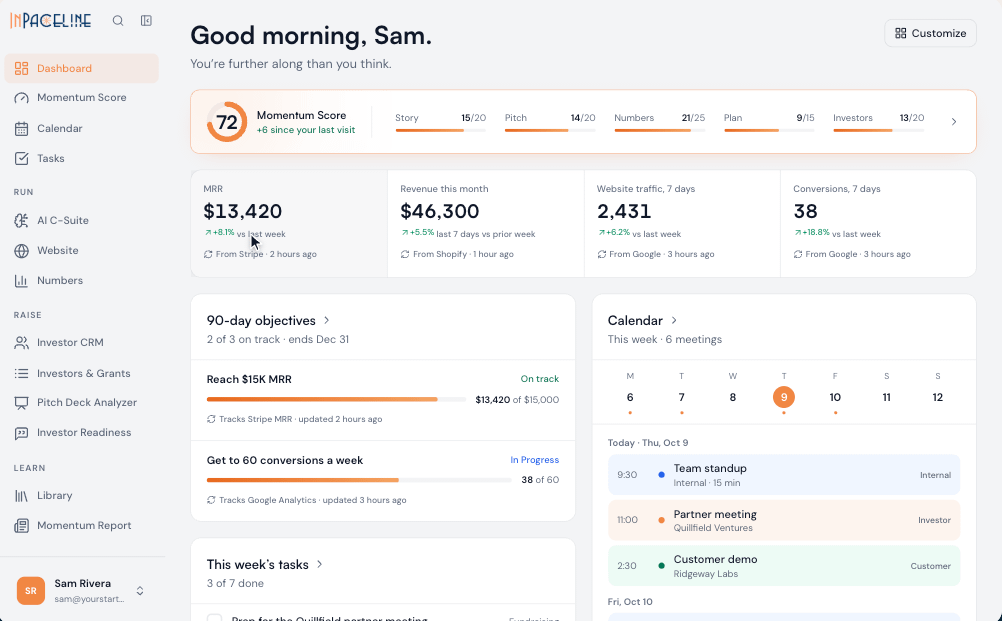
The Pitch Deck Analyzer- This was the most-opened tool in the app, and founders didn’t run it once and leave. They came back with each new version of their deck to check whether the score had moved. It turned into a habit, not a one-time check.
The AI C-Suite- Founders asked the AI CMO the most questions, then the COO, then the CFO. That surprised us. We’d assumed fundraising would be the first thing on everyone’s mind, but marketing was.
Tasks and Calendar Fewer founders used these, but the ones who did opened them almost every time they logged in. For them, FounderOS was where the week got planned.
The P&L This had the smallest group of users, but they came back to it more often than anyone came back to any other tool. Founders who track their numbers really do track them.
What most founders struggled with
It felt like 20 separate tools- A founder’s deck, numbers and tasks didn’t know about each other. Founders kept explaining their company to the AI from scratch, even though the app already had the answers in another tab.
They typed the same numbers in more than once- Revenue went into the P&L, then again into an investor update, then again somewhere else. Every copy was another chance for the numbers to drift apart.
It assumed every founder was raising- Founders who were heads-down building and selling found that half the app was written for someone else.
There was no obvious first step- With that many tools, founders logged in and couldn’t tell what mattered most this week.
None of those are founder problems. They’re software problems, and they were ours to fix.
What we changed
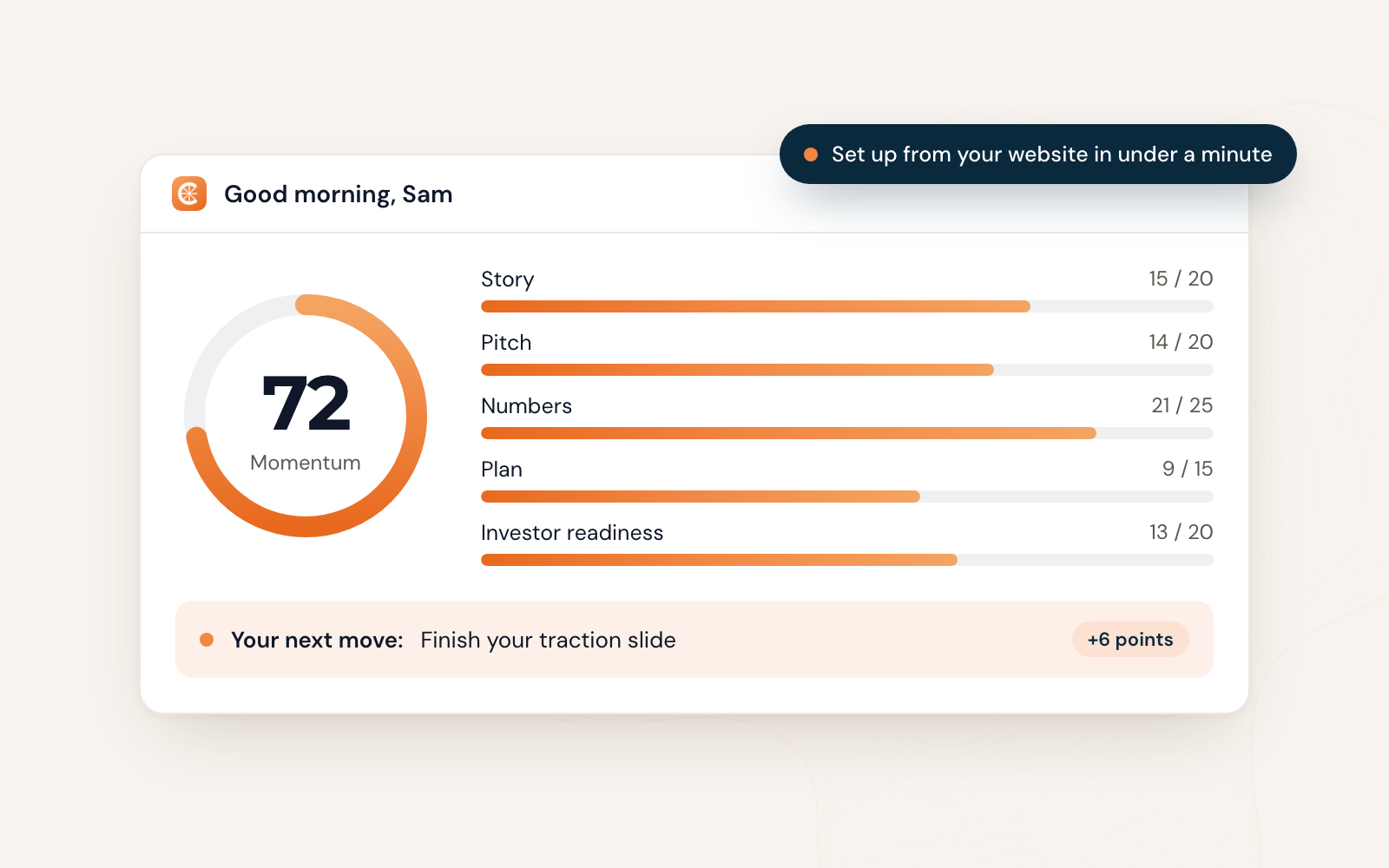
One home, one score and one next move. A founder pastes their website or drops in their deck. In about a minute the OS fills in the company profile, writes a 90-day plan and scores how far along the company is. Home then shows the one move that would help most right now, and how much it’s worth. A founder who isn’t raising won’t be pushed toward investors, and a founder who is raising sees investor moves first.
Founders no longer have to work out what to do first. The app tells them.
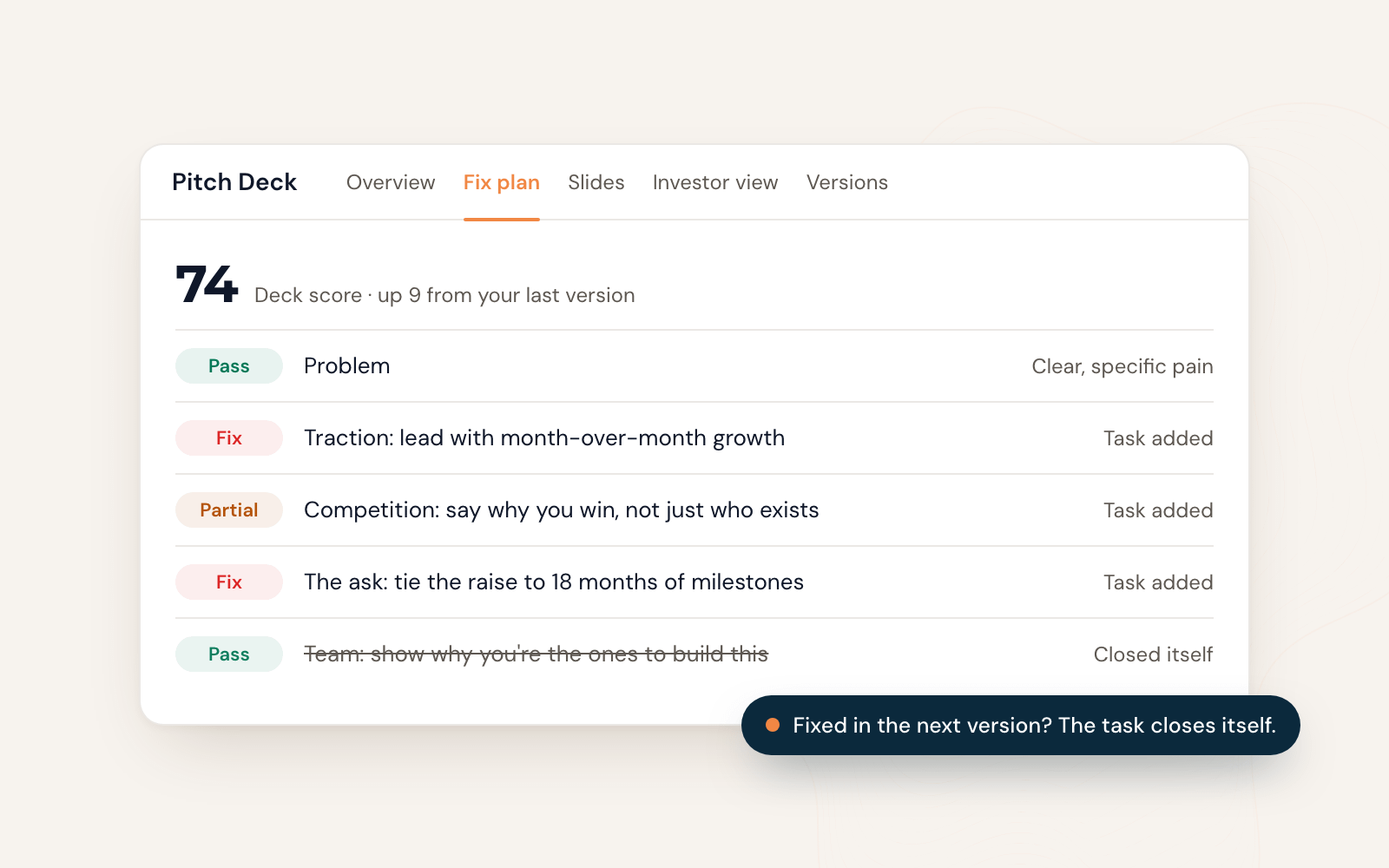
The deck review now comes with a fix plan. Founders were already coming back with each new version of their deck, so we built around that habit. Every weak slide gets one clear fix, and that fix goes straight onto the task list. When a new version passes the slide, the task closes itself. Founders can also see how an investor would read the deck and ask questions about any slide.
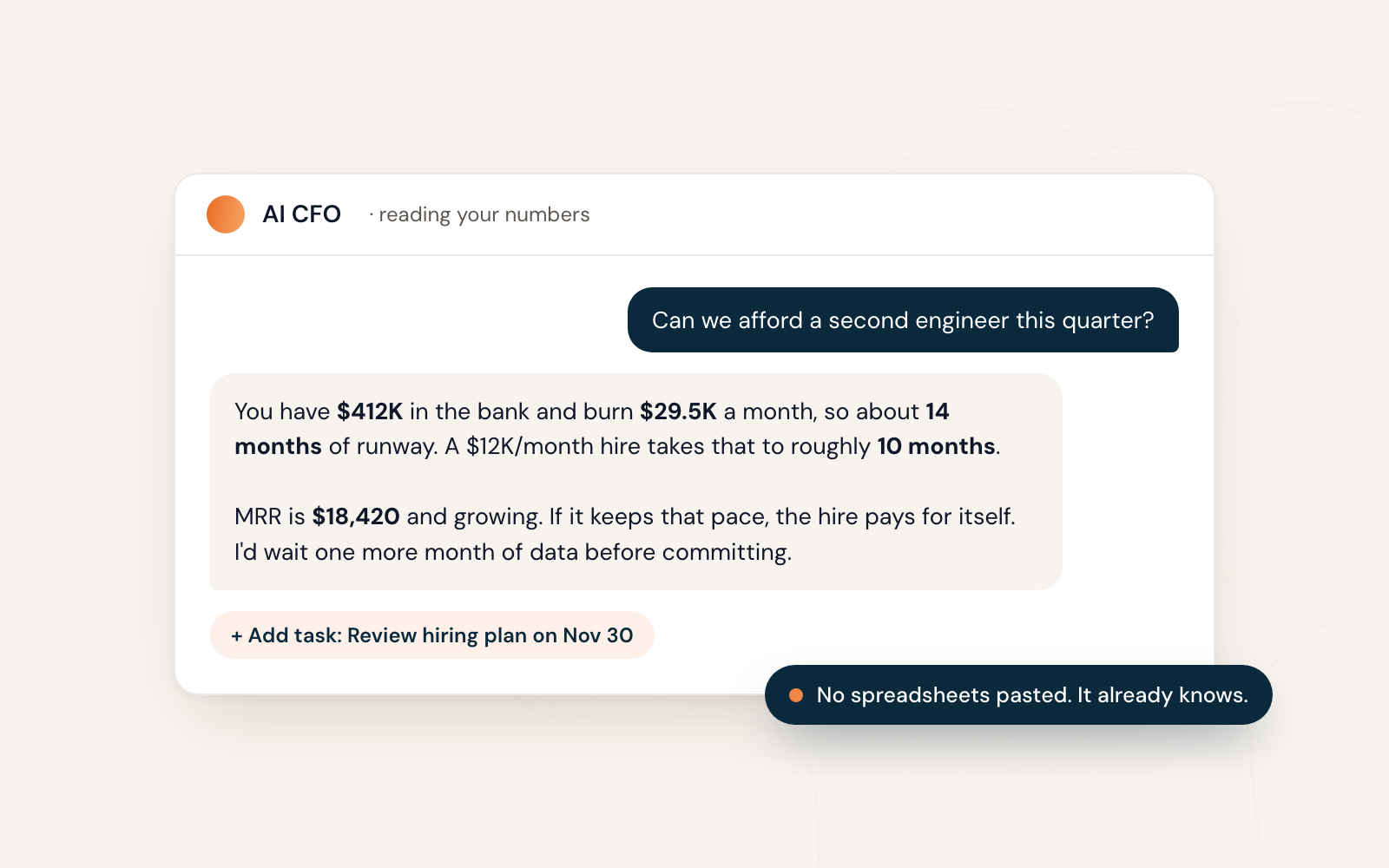
The AI already knows the company. Every advisor reads the founder’s real numbers, deck, website, goals and open tasks before it answers. There’s no spreadsheet to paste and no backstory to retype. A founder can ask from inside any tool, and when the AI suggests something worth doing, one tap turns it into a task.
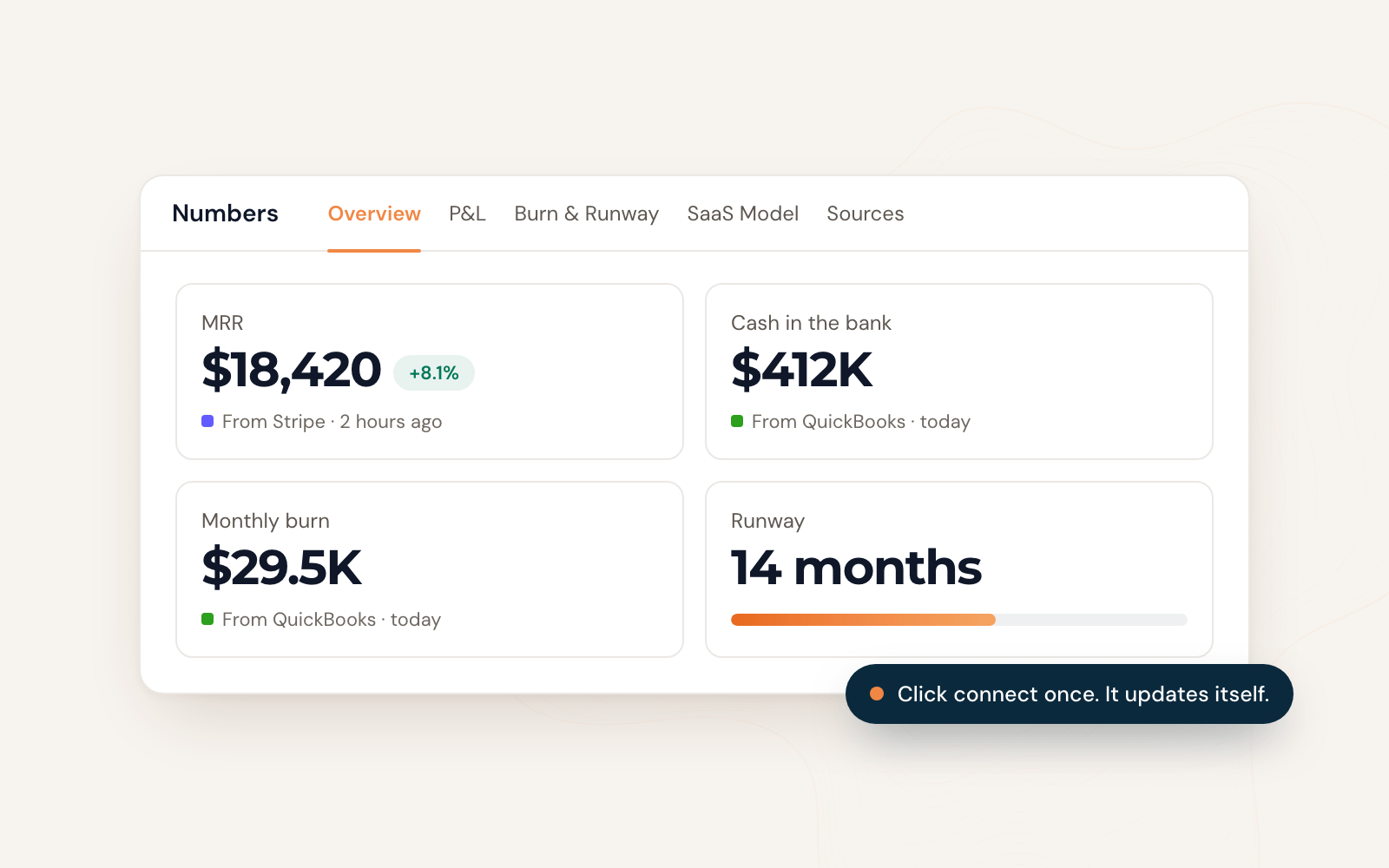
Click connect once and stop retyping numbers. Stripe, Shopify and QuickBooks fill in revenue, cash and burn on their own. Every figure shows where it came from and when it last updated. The same numbers feed Home, the AI advisors and investor updates, so there’s only ever one version of them.
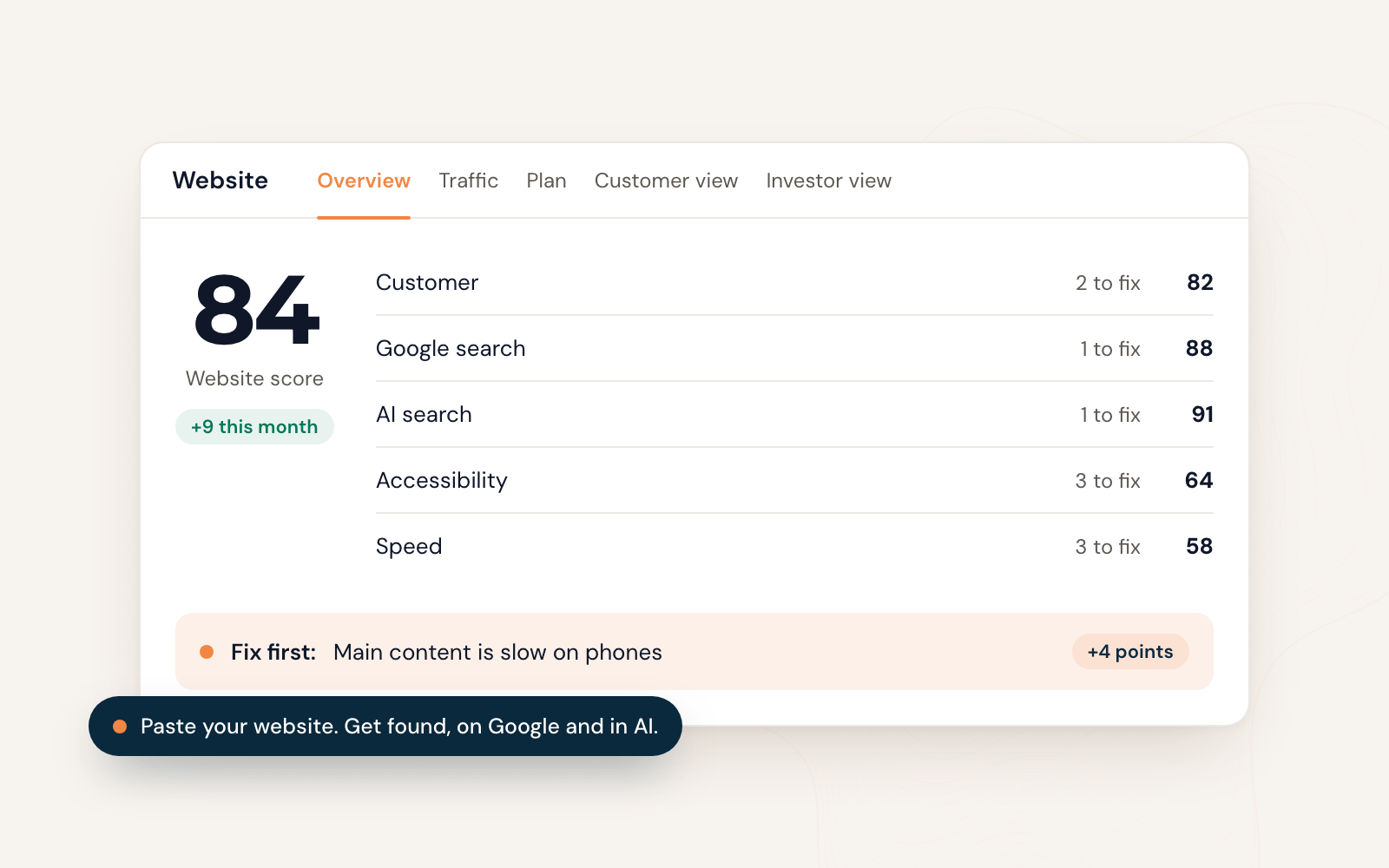
Paste a website and get found. Founders get a score for how the site reads to customers, how it shows up on Google and in AI search, how fast it loads and how accessible it is. The OS also says what to fix first and how much each fix is worth. Fixes become tasks, and the score climbs as they get done.
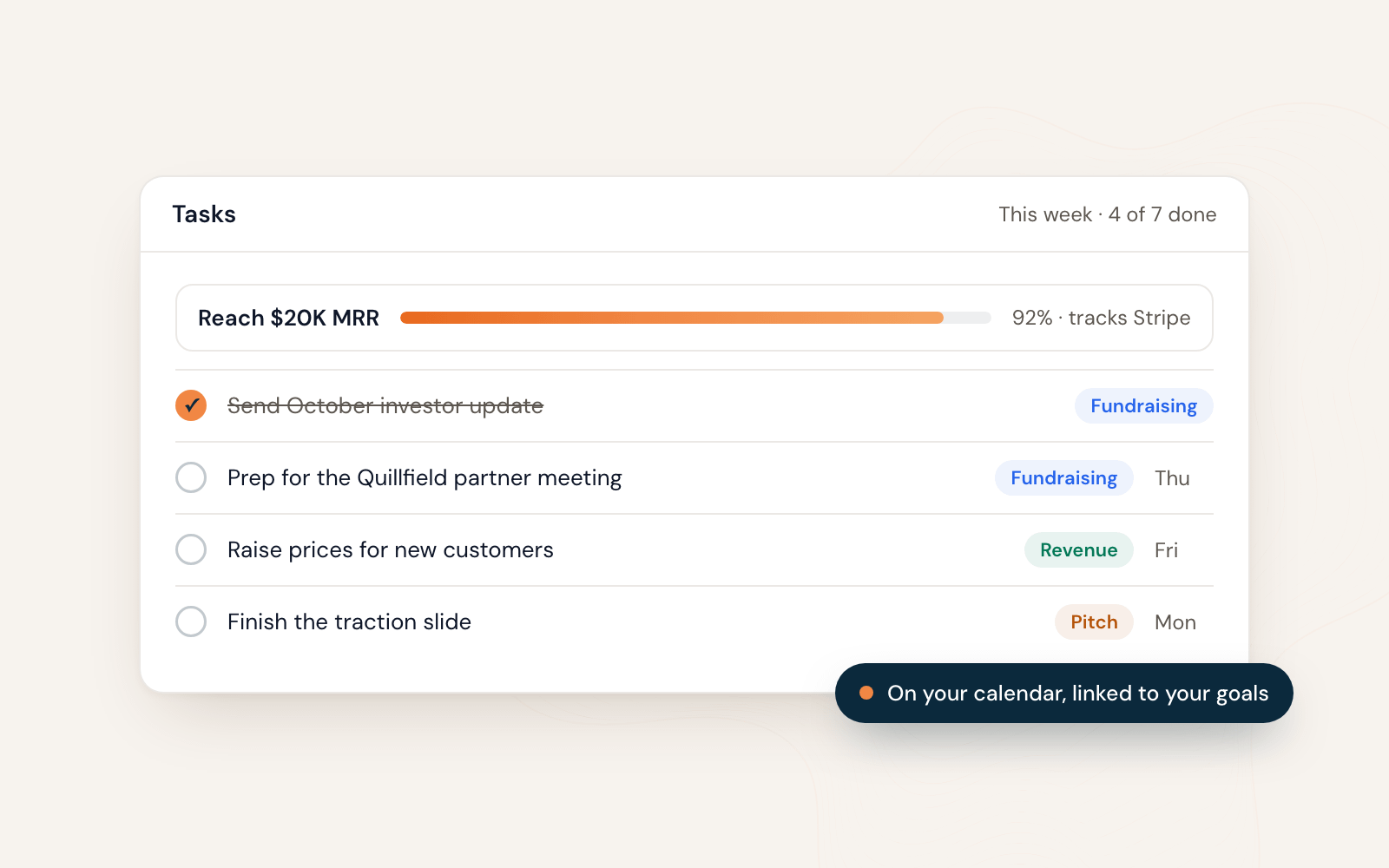
Tasks that work like a normal to-do list. We heard this one loud and clear. Tasks are now one simple list, linked to goals that track real numbers, and they sit on the calendar next to the founder’s meetings.
What’s next
InPaceline 2.0 launches in the next few weeks.
It does a lot more than the version our beta founders signed up for, so pricing will change at launch. Founders who join before then keep today’s rate.
If you’ve been with us since April: thank you. Every bug report, every feature request and every “this is confusing” is somewhere in this release. You built it with us.
More soon.
— Clay