Month 14 is where it usually hits.
You closed a pre-seed, hired two people, shipped a real product, and landed paying customers. You built the deck. You start taking coffees with the funds that told you to come back “when you have traction.” And somewhere in the second or third conversation, you find out what traction costs now. The median ARR needed to raise a Series A is now somewhere around $3.5 million, compared to roughly $1 million a few years ago. You have $400K. You also have four months of cash.
Nothing went wrong. You just budgeted for a gap that no longer exists.
Both ends of the ladder moved
The good news is real. Capital at the earliest stages is genuinely available right now, investors are funding more pre-seed companies than they have in years, and first-time financings have climbed back toward levels not seen since 2021. Pre-seed rounds generally land between $250K and $1.5M, with seed rounds running $1M to $5M. Getting started has not been this accessible in a long time.
The problem is the next rung. The median time between a seed round and a Series A has stretched to roughly 2.1 years, somewhere around 616 to 696 days depending on whose dataset you use. Carta’s Q4 2024 numbers put the median wait between primary rounds even higher, at 774 days. Meanwhile the share of companies that clear the jump fell hard. The 2022 seed cohort produced a two-year graduation rate of 15.4%, the lowest on record, against 30.6% for the 2018 cohort.
Put those two facts next to each other and you get the actual 2026 dynamic. It is easier than ever to raise your first money and harder than ever to raise your second. Investors are front-loading risk, writing smaller checks earlier to own a piece of the winners before valuations jump at the A. That is a rational strategy for them. For you, it means the cheap money at the start is partly funding a longer, lonelier middle.
The bridge round became the middle of the ladder
Here is the tell. In Q1 2025, 46% of all seed deals on Carta were bridge rounds, the highest bridge rate for any stage Carta has tracked, up from 39% for full-year 2024 and 31% in 2022. Series A deal count fell 79% between Q1 2022 and Q1 2025.
Bridges used to be a warning sign. Now they are the normal path. That is not automatically bad, but understand what you are buying. A bridge is not extra time. It is a deferral with a proof deadline attached, and it usually comes from the people already on your cap table, which means you are spending existing goodwill rather than raising new conviction.
The founders who handle this well do not treat the bridge as a surprise. They plan for the possibility on day one of the seed and make it a choice instead of a rescue.
The gap budget
Stop budgeting in months of runway. Budget the distance to a specific piece of evidence. Four steps.
1. Date the window, not the runway. Take your close date and add 24 months, then mark month 18 on the calendar. That is when you need to be in market with your raise, not when you need to start thinking about it. If your seed closed in March, you are pitching two Marches later with real numbers in hand.
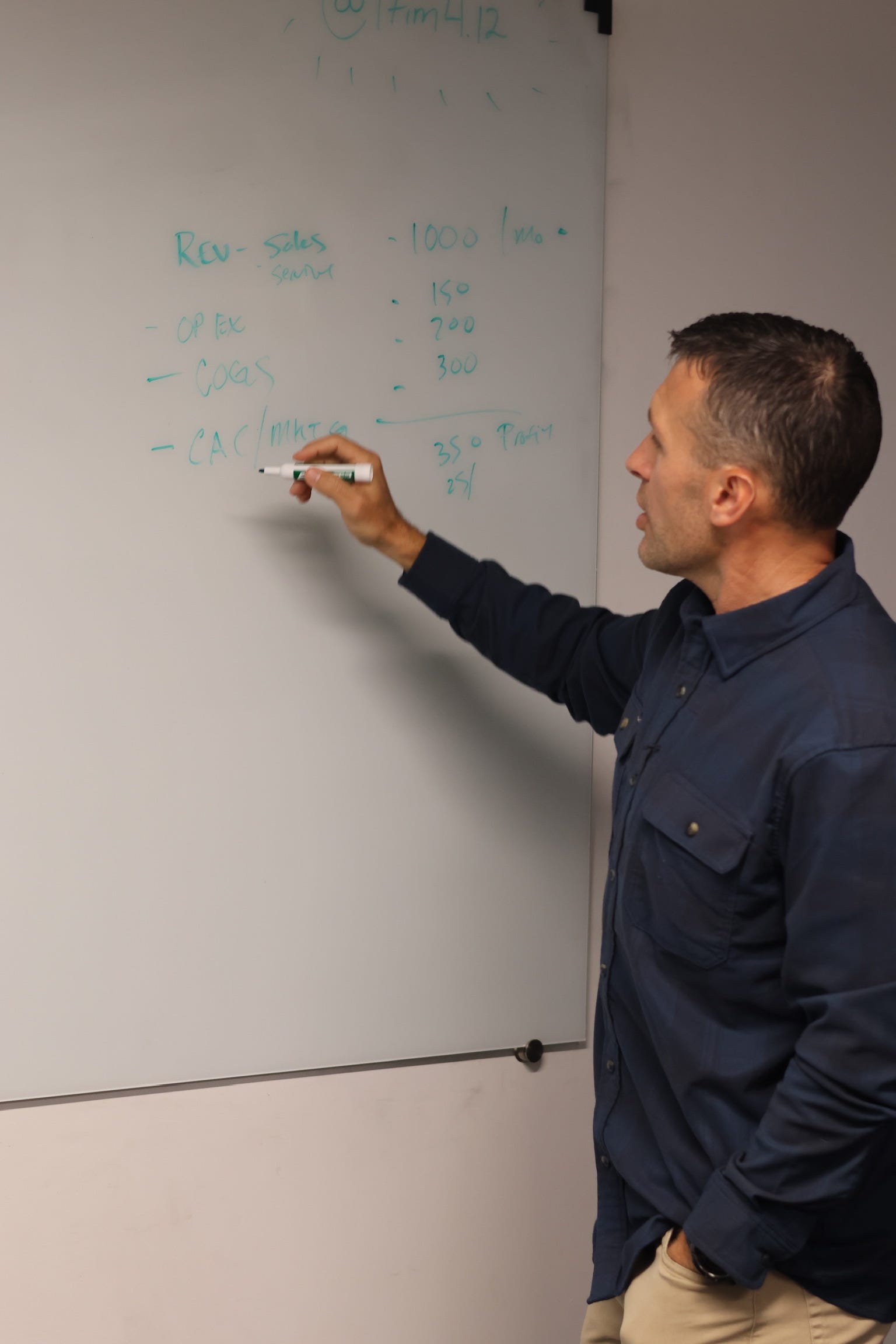
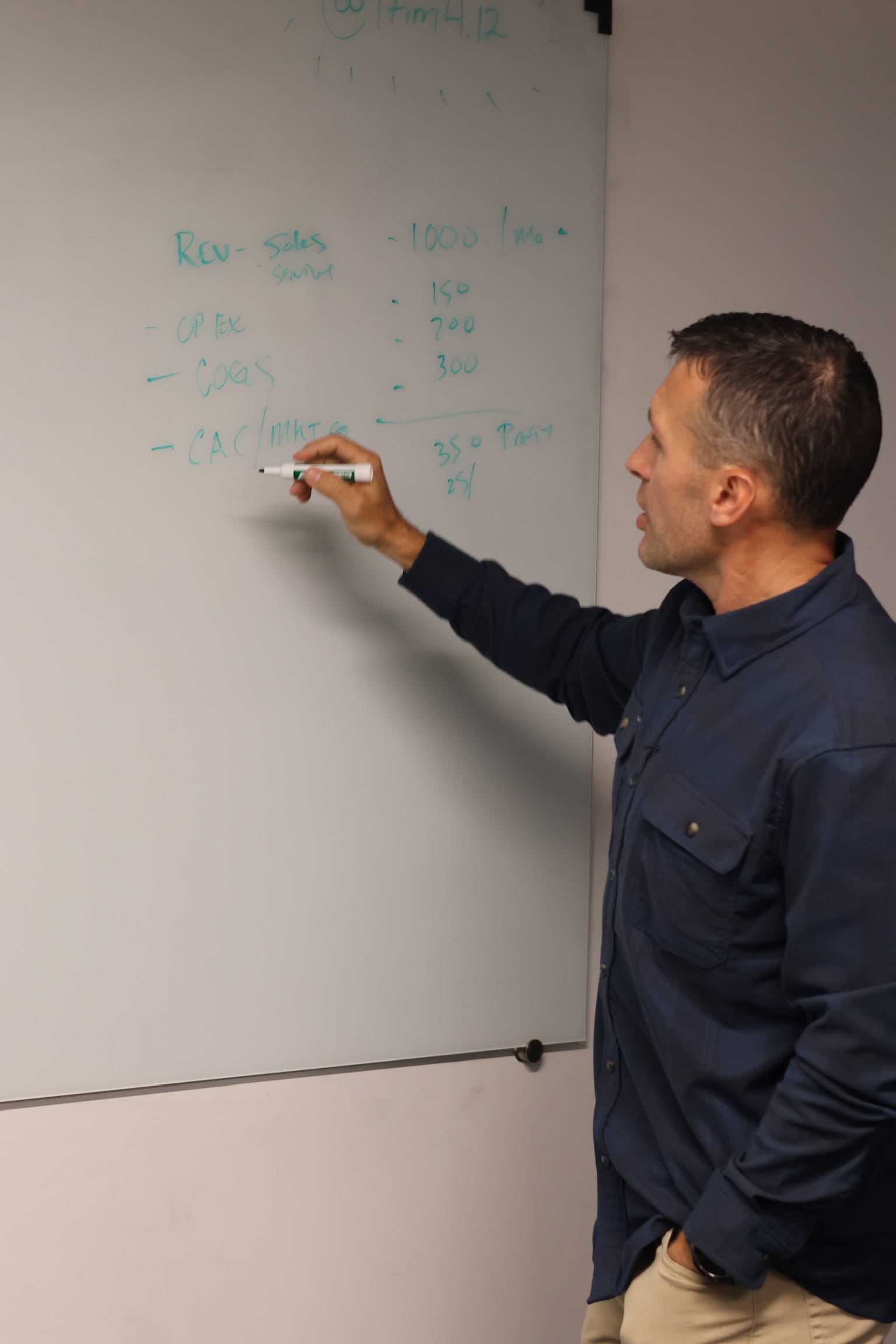
2. Price the proof, not the plan. Write down the single metric that makes you fundable at that window. Usually it is revenue and the efficiency behind it. Then work backward. What does getting to that number cost in headcount, tools, and paid acquisition? If the honest answer exceeds what you raised, you have a gap now, on a spreadsheet, while you can still do something about it. That is much better than finding out at month 14.
3. Set your cut lines before you need them. Decide today what happens at 12 months of cash, at 9, and at 6. Which hire gets paused. Which contract gets cut. Which experiment gets killed. Founders who decide this in advance act in a week. Founders who decide it in the moment take two months and burn the difference deliberating.
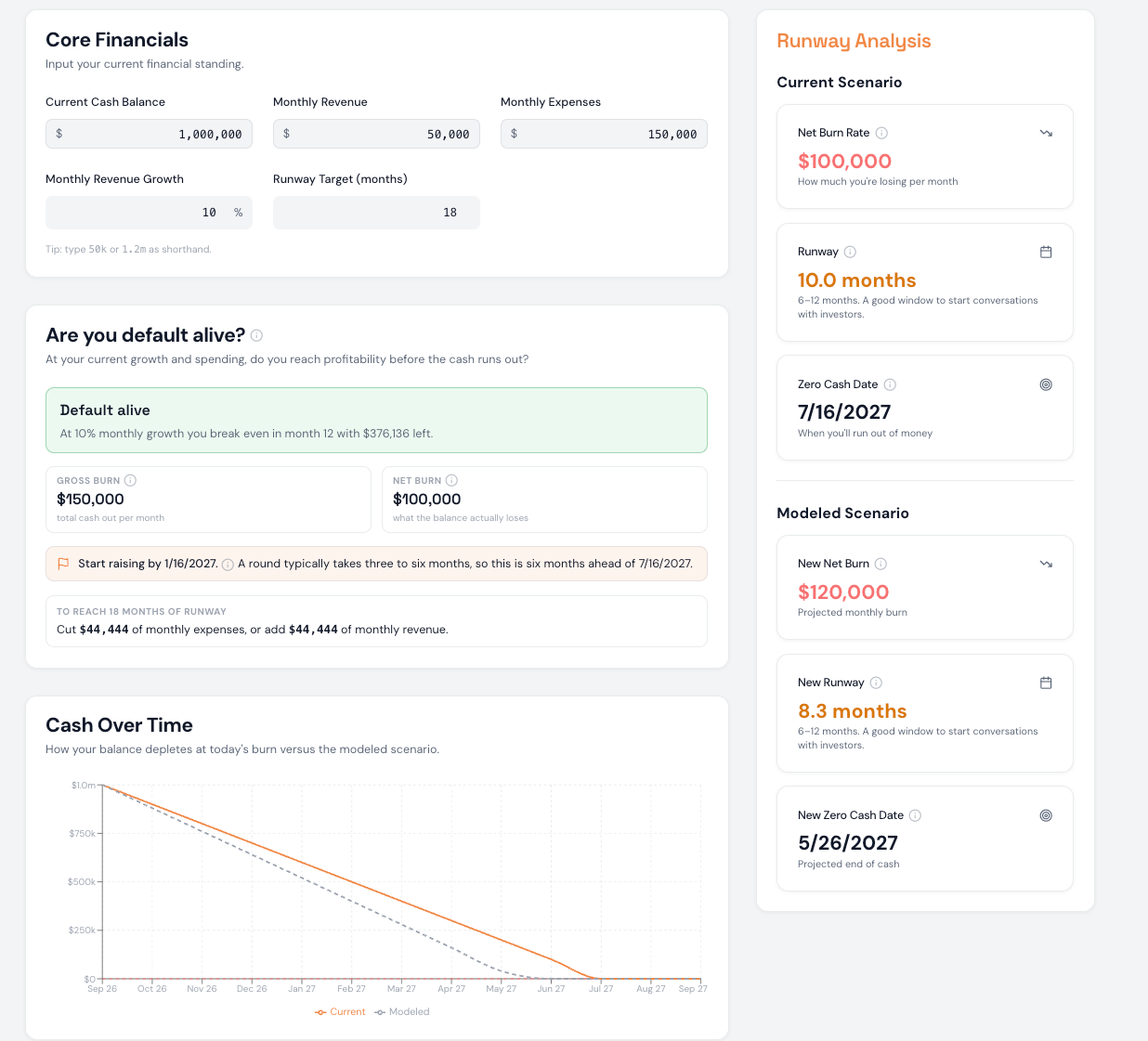
4. Model three futures every month. Base case, no-raise case, and bridge case. The no-raise case is the one that matters, because it tells you the date your company has to be default alive by. Run it monthly, not quarterly. Burn drifts, and it drifts upward.
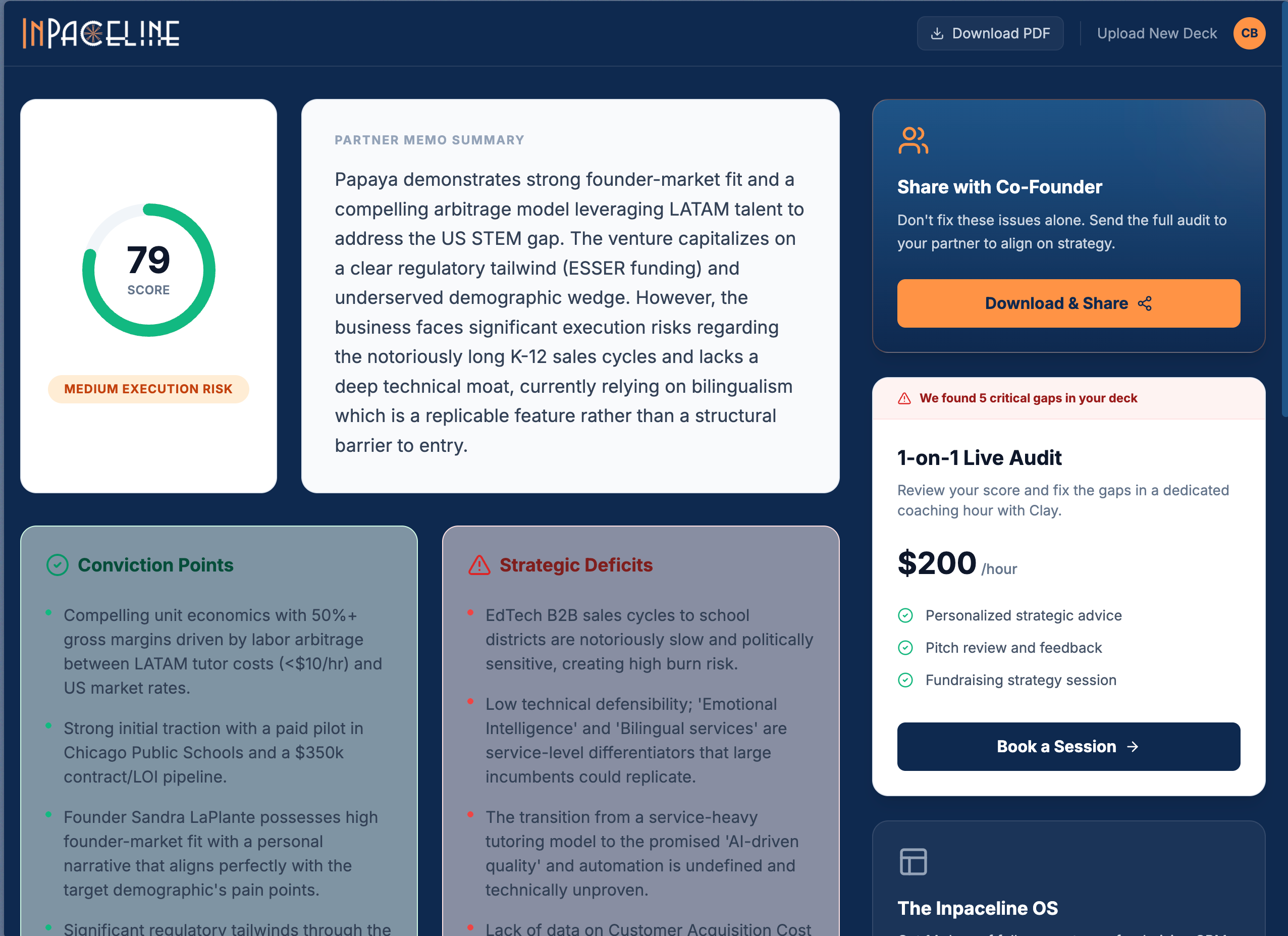
This is exactly why we built the Burn Rate and Runway Calculator into InpacelineOS. It maps your real burn against the 24-month window and lets you model scenarios side by side, so you can see what happens when a hire slips a quarter, a customer churns, or the raise takes two cycles longer than planned. The point is not a prettier spreadsheet. It is knowing your actual date, and knowing it early enough that the decision is still yours.
One more thing worth internalizing. The median seed-stage company on Carta now has four employees beyond the founders, while the median Series A company has fifteen to seventeen, a sharp compression from three to five years ago when those numbers were six or seven and around forty-five. The bar went up and the expected team size went down. Nobody is going to be impressed that you spent the money faster.
If you are already in the gap
Do not lead with the ask. Lead with a narrowed milestone. Pick the one proof point you can hit in two quarters with the cash you have, cut everything that does not serve it, and go get it. Money follows evidence right now, and evidence is cheaper to produce than it has ever been.
There is also a reason for cautious optimism here. Roughly 10 to 11% of the 2025 seed cohort graduated to a Series A within a single year, compared to 4 to 5% in 2022 and 2023. The market is loosening. It is just loosening for companies that arrive with proof, on a schedule they planned.
The founders who die in this gap are almost never the ones who ran out of ideas. They ran out of months they never counted. Go count yours at inpaceline.com.