
Pre-Seed Funding: How Much Capital Should Founders Raise?
Quick Answer
Most pre-seed founders should raise 18 months of runway, which typically lands between $500,000 and $1.5 million depending on team size, burn rate, and industry. Software teams often sit near the lower end, while hardware or regulated categories push higher because the milestones cost more to reach.
Introduction
Pre seed funding is the first real money that goes into a company before the product has proven anything. Raise too little and you run out before the traction shows up. Raise too much and you hand away equity you will spend the next decade wishing you kept. The math is not complicated, but almost every first-time founder gets it wrong because they anchor to a headline number they saw on Twitter instead of building the raise around their own burn, milestones, and dilution ceiling.
Key Takeaways:
Size the raise around 18 months of runway plus a specific milestone that unlocks the next round, not a round-number figure.
Pre seed capital ranges widely by category, with software founders often raising less than hardware or deep tech teams for the same milestone.
Investors care about the story your burn rate tells, so a defensible model matters more than a polished pitch deck.
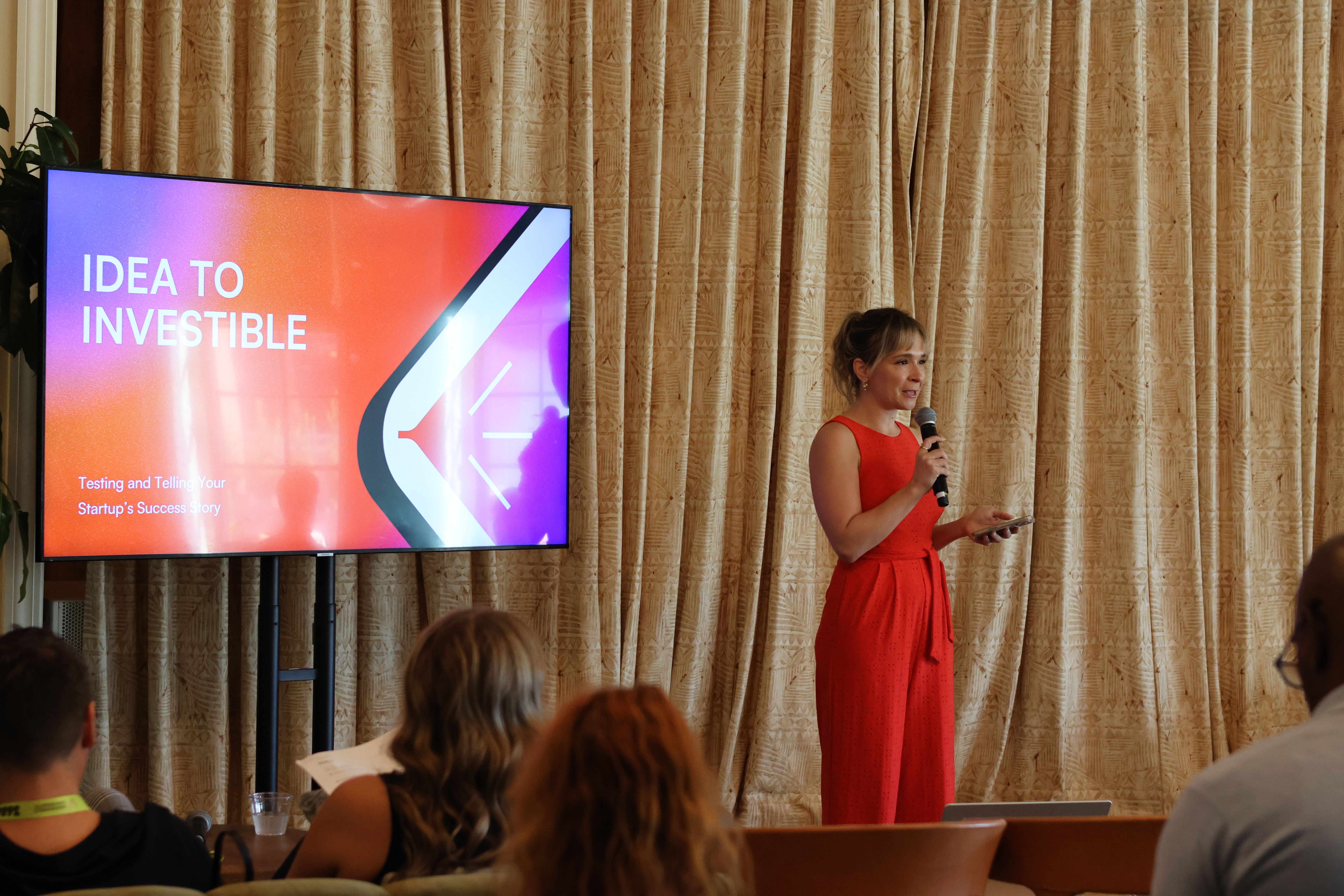
What Pre Seed Funding Actually Covers
Pre seed capital exists to buy time to prove one thing: that the problem is real and your team can build something people want. It is not seed. It is not a Series A. It funds the specific work between "idea on a napkin" and "we have data an investor will underwrite."
Typical Pre Seed Raise Ranges by Category
Raise sizes cluster by what the first 18 months of building actually cost. A pure software MVP built by two technical cofounders costs a fraction of a hardware prototype with tooling, certifications, and supply chain deposits. The table below shows the working ranges founders should benchmark against before writing a target number on the deck.
Startup Category | Typical Pre Seed Range | Primary Cost Drivers | Common Milestone Bought |
|---|---|---|---|
B2B SaaS | $500K – $1.2M | Engineering salaries, cloud infra | Working product, 5-10 paying design partners |
Consumer app | $750K – $1.5M | Engineering, paid acquisition tests | Retention curves, early cohort data |
Hardware | $1M – $2.5M | Tooling, prototypes, certifications | Functional prototype, first purchase orders |
Deep tech / regulated | $1.5M – $3M | R&D, IP, regulatory work | Technical validation, pilot contracts |
The pattern is simple: your raise should equal the cheapest credible path to a milestone that makes seed investors compete for your round. Anything more is dilution you did not need to take. Public benchmarks from the fundraising benchmarks report confirm that capital efficiency at pre seed is one of the strongest predictors of who raises the next round.
Pre Seed Funding vs Seed Funding
Pre seed buys you the right to raise a seed. Seed capital is priced on early traction, so the milestones you commit to at pre seed are effectively the pitch for your next round. Founders who blur the two rounds together end up raising a hybrid that dilutes too much for what they have proven. Reading up on the full sequence of seed funding stages before you set a target keeps the two rounds properly separated in your planning.
How to Calculate Your Pre Seed Raise Number
The right pre seed number is not a guess. It is a calculation built from three inputs: your monthly burn, the milestone you need to hit, and how much cushion you keep for the raise itself.
The 18-Month Runway Framework
Plan for 18 months of runway from close to next raise. Nine months to hit the milestone, three to package the story, six to run the next round. Anything shorter and you will be fundraising while executing, which is how founders lose both.
Monthly burn: Every recurring cost including salaries, tools, infra, contractors, and the founder salary you keep pretending you do not need.
Milestone cost: One-time spend to hit the specific proof point that unlocks seed, such as a prototype, certifications, or paid pilots.
Buffer: Add 15 to 20 percent on top for the things you will not see coming, because you will not see them coming.
Dilution ceiling: Aim to give up 15 to 20 percent at pre seed. If your target raise pushes past that on your current valuation, cut scope or raise the valuation with more traction first.
Run those four inputs through a real model, not a napkin. Founders who anchor their raise to defensible burn rate and runway math walk into investor meetings with a number they can defend line by line. That is what closes rounds.
Example: The $900K SaaS Raise
Two cofounders, one engineer contractor, cloud costs, and a small marketing budget. Monthly burn lands around $45,000. Over 18 months that is $810,000, plus a small buffer, which puts the raise at roughly $900,000. The milestone is 10 paying design partners and $10,000 in monthly recurring revenue. That story sells a seed round. Padding this raise to $1.5 million without a bigger milestone just costs the founders equity. Getting the valuation right is its own exercise, so review common startup valuation methods before you set the price on the round.
What Pre Seed Investors Actually Look For
Pre seed investors are underwriting the founder, not the company. There is no product to diligence, no revenue to model. What they can evaluate is how you think, how you spend, and whether the milestone you promised is the right one.
Signal Investors Weigh at Pre Seed
Angel investors and pre seed venture capital firms both look for the same core signals, but they weight them differently. Angels lean on founder conviction and domain edge. Institutional pre seed funds want to see a defensible market and a path to a seed-worthy metric. Federal programs like the NSF SBIR program add another lane for research-driven startups where technical milestones matter more than commercial traction. Inpaceline's vetted investor lists and investor FAQ database inside the Fundraising Command Center are built around exactly these signals so founders can match their story to the right check writer.
Milestone Clarity Beats Vision
Vision gets you a first meeting. A specific, dated milestone gets you a term sheet. Investors need to know what your money buys and how they will know if it worked. "We will find product-market fit" is not a milestone. "10 paying customers at $1,000 MRR each by month 12" is a milestone. The tighter the commitment, the more credible the raise, which is why founders should pair their pitch with rigorous startup financial planning before the first investor call.
Pre Seed Mistakes That Kill Rounds
Most failed pre seed rounds die from the same handful of mistakes. None of them are about the idea. They are about how the founder framed the raise.
The Common Failure Patterns
Raising for 12 months: You will be back in market before you have proof, and investors will pass on a round that has not moved.
No burn model: If you cannot answer "what does month 9 look like," investors assume you have not thought about it, because you have not.
Vanity milestones: Downloads, signups, and waitlists do not price a seed round. Revenue, retention, and paid pilots do.
Over-raising: Taking $2 million when $900,000 was enough locks you into a seed valuation you may not earn back for years.
Wrong investor mix: Angels for conviction, funds for follow-on capacity. A cap table full of one and none of the other creates problems at seed.
Every one of these is fixable before the first meeting. Founders who model burn honestly, using a proper burn rate calculator, and commit to milestones they can actually hit close rounds faster and give up less equity doing it. Inpaceline's Financial Intelligence Suite is designed to stress-test exactly these numbers before founders walk into a pitch.
Conclusion
Pre seed is not about how much you can raise. It is about how little you need to prove the next thing. Size the round around 18 months of runway and one specific milestone, defend every number in your model, and match your investor mix to what you actually need at seed. Founders who treat pre seed as a math problem, not a hype problem, keep their equity and their optionality. That is what compounds across the next five rounds.
Frequently Asked Questions (FAQs)
What is pre seed funding?
Pre seed funding is the earliest formal round of startup capital, raised from angels, pre seed venture capital firms, or accelerators to validate the idea, build an initial product, and reach the traction needed to price a seed round.
How much pre seed funding should I raise?
Raise enough to cover 18 months of monthly burn plus the one-time cost of hitting a milestone that unlocks a seed round, which for most software teams lands between $500,000 and $1.2 million and for hardware or deep tech pushes higher.
What do investors look for in a pre seed startup?
Pre seed investors weigh founder-market fit, a defensible burn model, a specific dated milestone tied to the raise, and evidence that the founder can execute without needing another round to prove basic assumptions.
Angel investors vs venture capital for pre seed: which is better?
Angels move faster and back conviction earlier, while pre seed venture capital firms bring follow-on capacity and structured support, so most founders build a blended cap table that leans on angels for the first checks and one institutional lead to anchor the round.
Why is my pre seed round failing?
Rounds usually stall because the milestone is vague, the burn model is not defensible, the raise size does not match the story, or the founder is pitching institutional funds before the traction warrants an institutional check.
How to raise pre seed funding in Tennessee?
Nashville and the broader Tennessee ecosystem have a growing base of angels, regional funds, and founder resources, and the fastest path is to combine local angel introductions with a targeted list of pre seed funds that back your specific category rather than pitching everyone at once.
About the Author
Clay Banks is an 8-time founder and startup growth advisor with over 23 years building hardware and software companies, raising more than $5 million in capital, and appearing on Shark Tank. He founded Inpaceline to give early-stage founders the tactical fundraising tools, financial models, and coaching he wished he had when starting out.