
Startup Productivity: Systems That Help Founders Work Smarter
Quick Answer
Startup productivity is not about working more hours, it is about building repeatable systems that protect founder attention for high-leverage work. The founders who scale fastest treat productivity as an operating problem: prioritization frameworks, AI-assisted delegation, and runway-aware planning replace heroic effort with consistent execution.
Introduction
Most founders lose weeks every quarter to work that could have been systemized, automated, or skipped entirely. The fix is not another productivity app or a longer to-do list. It is a small stack of operating systems that decide what gets done, who or what does it, and how it ties back to runway. That shift, from working harder to running a tighter operation, is what separates founders who raise on their timeline from founders who run out of cash chasing the same milestones. This piece breaks down the exact systems that hold up under pre-seed chaos and Series A pressure.
Key Takeaways:
Repeatable systems, not longer hours, are what compound into faster fundraising and product-market fit.
AI tools handle structured analysis and execution, while founders protect judgment work like investor calls and pricing decisions.
Every productivity choice should tie back to a runway math check before it gets built into the week.
The Hard Truth About Founder Time
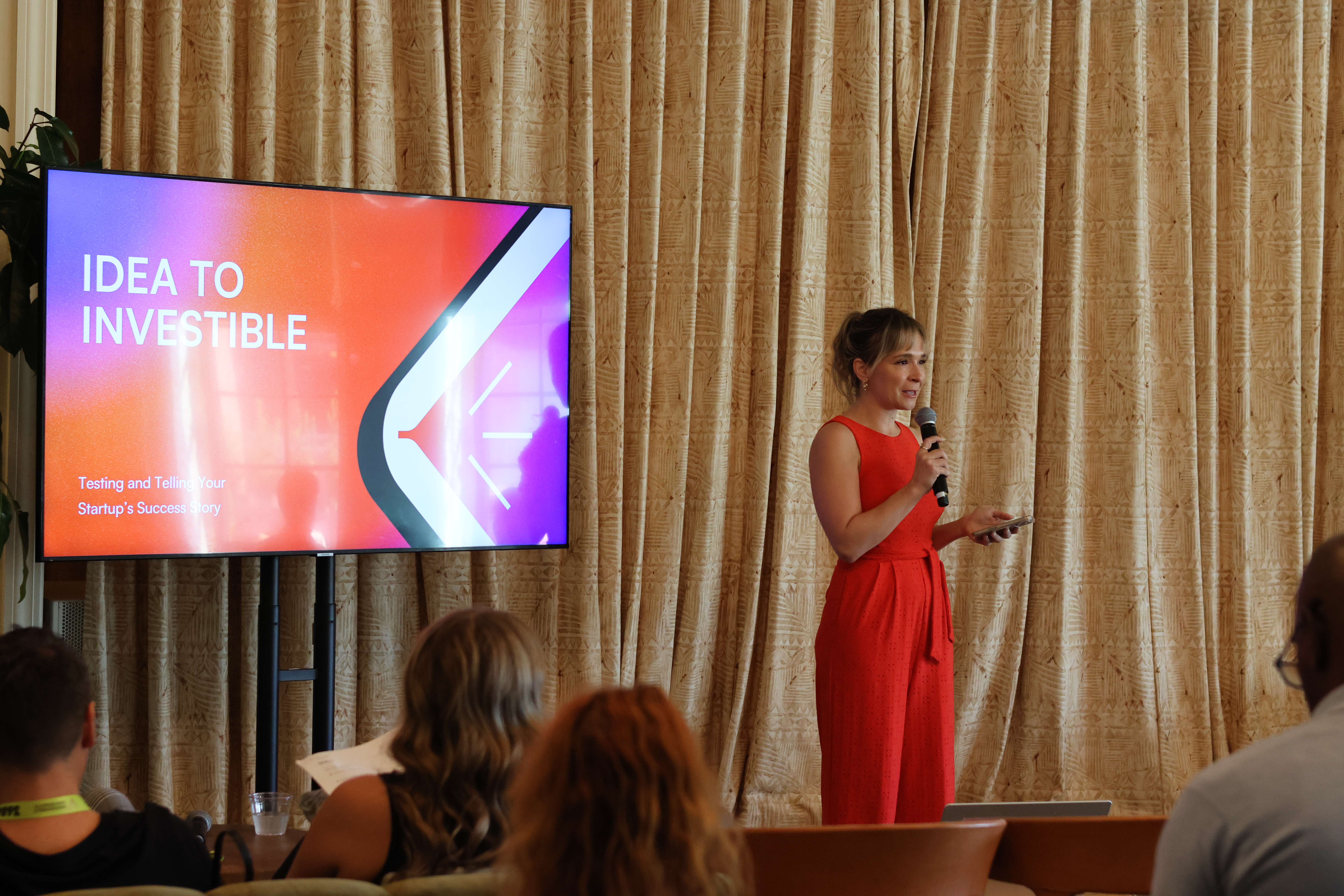
Founders burn out because they treat every task as equally urgent. Your calendar is a balance sheet: hours spent on low-leverage work are hours borrowed from fundraising, product, and hiring. A startup operating system starts by admitting that most of what fills a founder's day does not move the company forward.
Ranking Work by Leverage, Not Urgency
Ranking work by leverage means asking one question before any task: does this directly move revenue, runway, or a fundraising milestone? If the answer is no, it belongs in a queue for automation, delegation, or deletion. Founders who apply this test weekly recover 8 to 12 hours in the first month.
Revenue-moving work: sales conversations, pricing decisions, and pipeline reviews stay on the founder's calendar.
Runway-moving work: investor outreach, financial modeling, and hiring plans get protected time blocks.
Signal-moving work: customer interviews and product decisions require founder judgment and cannot be outsourced.
Everything else: reporting, formatting, research digests, and first drafts belong to AI or a virtual assistant.
Recurring low-value tasks: automate first, delegate second, tolerate never.
Protecting High-Value Hours
The first two hours of your morning are the only guaranteed uninterrupted block you will get. Use them for the one task that would still matter if the rest of the week fell apart, usually investor prep, a strategic doc, or a critical product decision. Guides on protecting high-value hours exist for a reason: founders who defend this window ship more, raise faster, and think more clearly under pressure. Everything else fits around it, not the other way around. Studies on the scale-up transition also point to data-driven systems and AI as the highest-leverage way to compound founder time as the company grows.
Building Your Startup Operating System
A startup operating system is not software, it is the decision layer above your software. It defines how goals get set, how work gets prioritized, how progress gets tracked, and where AI plugs in. Without it, tools multiply and productivity drops.
The Four Layers Every Founder Needs
Every functional startup operating system covers four layers: strategy, execution, measurement, and capital. Strategy sets the 90-day objectives. Execution turns those into weekly work. Measurement tracks whether the work moved the number. Capital ensures every decision respects runway. When one layer breaks, the others compensate with hours the founder does not have. A tight OKR framework for alignment at the strategy layer prevents most of the churn that sinks pre-seed teams.
AI Tools Versus Human Judgment
The mistake is treating AI as a replacement for founder thinking. AI is fast at structured analysis, drafting, research synthesis, and financial modeling. It is unreliable for judgment calls that depend on context AI cannot see: investor relationships, team dynamics, or a customer's real reason for churning. The table below shows where each option belongs in a founder's week.
Task Type | AI Tools | Human Coaching | Founder Only |
|---|---|---|---|
Financial modeling and runway scenarios | Primary | Review | Approve |
Pitch deck feedback and scoring | Primary | Refine | Final call |
Investor list building and research | Primary | Prioritize | Outreach |
Pricing and packaging decisions | Analyze | Challenge | Decide |
Hiring key roles | Screen | Interview loop | Decide |
Board and investor calls | Prep only | Rehearse | Own fully |
The pattern is clear: AI expands what one founder can produce, but the highest-stakes decisions still sit with the person whose name is on the cap table. Platforms like Inpaceline combine both by pairing an AI virtual C-suite with structured coaching, so founders do not have to stitch tools together.
Systems That Scale With Growth Stage
The productivity systems that work at pre-seed will break at Series A if you do not evolve them. What scales is the framework, not the specific tool or ritual. Founders who treat systems as living documents avoid the rebuild that costs most teams a full quarter.
Pre-Seed to Seed: Speed Over Structure
At pre-seed, the job is to compress learning cycles. One weekly planning session, one shared doc, one metric that matters, and an virtual C-suite framework for strategic questions is enough. Adding process too early slows down the exact iteration speed that gets you to product-market fit. Research on the startup to scale-up transition repeatedly finds that founders who over-engineer process before traction stall out.
Seed to Series A: Structure Over Speed
Once you have paying customers and a small team, unstructured speed becomes chaos. This is where a KPI dashboard tracking system, documented playbooks, and delegated ownership start earning their keep. The founders who reach $1M ARR fastest are the ones who wrote down how they got their first ten customers and handed that document to someone else. Insights on repeatable systems for scaling back this up: consistent execution beats occasional brilliance every time. This is also the stage where an AI COO for operational systems pays for itself several times over by handling the operational load a full hire would cost 15x more.
Conclusion
Founder productivity is not a personal discipline problem, it is a systems problem. Rank work by leverage, protect the hours that move revenue and runway, and let AI handle everything that does not need your judgment. Build the four-layer operating system early, evolve it as you grow, and stop treating longer hours as a strategy. The founders who raise on schedule and hit $1M ARR are not working harder than you, they are working inside a tighter system. Tools like Inpaceline exist so you do not have to build that system from scratch.
Frequently Asked Questions (FAQs)
What are the best AI tools for startup founders?
The best AI tools for founders are ones tied to specific outcomes like runway modeling, pitch deck scoring, and investor research, rather than generic assistants that add another tab to your browser.
How do you use AI for business strategy without losing founder judgment?
Use AI to generate options, model scenarios, and pressure-test assumptions, but keep the final decision with the founder who owns the context AI cannot see.
Why is startup coaching important when AI tools exist?
Coaching is important because AI can tell you what the data says, but a coach who has raised capital and scaled a company can tell you what to actually do about it.
Can AI replace a startup CFO?
AI can replace most of what a fractional CFO does at the pre-seed and seed stage, including runway modeling, scenario planning, and cash flow tracking, at roughly 1% of the cost.
How do you manage startup runway effectively?
Effective runway management means running weekly scenario models, tying every hire and spend decision to a specific milestone, and never letting runway drop below six months without an active raise.
How do you scale from zero to one million in revenue?
You scale to $1M by documenting how you got your first ten customers, systemizing that motion, and refusing to add complexity until the current system is fully utilized.
Human coaching versus AI business tools, which matters more?
Both matter, but at different moments: AI handles daily execution and analysis while human coaching resolves the strategic questions that determine whether you raise or run out.
About the Author
Clay Banks is an 8x founder and startup growth advisor with over 23 years of experience building hardware and software companies. He has raised more than $5M in capital, holds three patents, and appeared on Shark Tank. Clay founded Inpaceline to give early-stage founders the exact operating system, AI tools, and coaching he wished he had when starting out.